

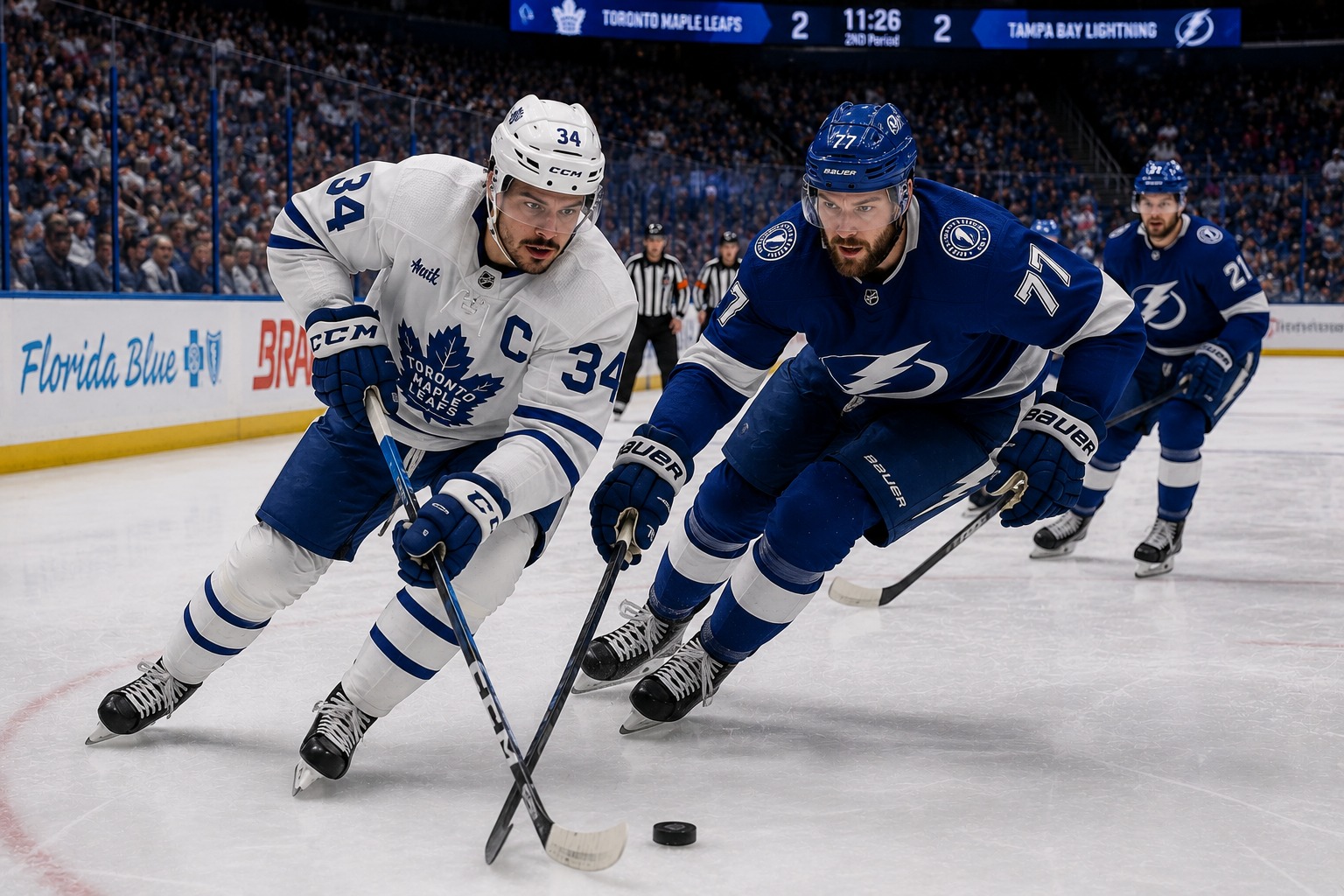
A standard NHL hockey game lasts 60 minutes of regulation play, but from the moment you sit down to the final buzzer, expect to spend around two and a half hours at the rink. That is the short answer. The longer answer involves three 20-minute periods, two 18-minute intermissions, media timeouts, potential overtime, and the occasional shootout that can push the clock well past three hours.
If you have ever found yourself at a game wondering why it feels so much longer than an hour, this guide explains exactly where all that time goes. We cover NHL game length, period durations, intermission rules, overtime formats for both the regular season and playoffs, and how amateur and youth hockey games compare. By the end, you will know precisely what to expect and how to plan around it.
In practice, watching a hockey game live or on television rarely lines up with the 60-minute regulation clock. The gap between game time and real time is something new fans consistently underestimate and understanding it makes the experience far more enjoyable.
How Long Is a Hockey Game in Real Time?
A professional NHL hockey game takes approximately two hours and thirty minutes from start to finish in real time. The regulation clock runs for 60 minutes total, split across three 20-minute periods. But the actual elapsed time is nearly two and a half times longer when you factor in all the built-in breaks.
Here is where the time actually goes during a typical NHL game:
| Element | Duration | Notes |
|---|---|---|
| Three regulation periods | 60 minutes | 3 x 20 minutes of play |
| First intermission | 18 minutes | Ice resurfacing + TV ads |
| Second intermission | 18 minutes | Ice resurfacing + TV ads |
| Media timeouts per period | ~6 minutes | At least 3 per period in NHL |
| Stoppages, penalties, injuries | ~10–15 minutes | Varies per game |
| Regular season overtime (if needed) | 5 minutes | 3-on-3 sudden death |
| Shootout (if needed) | ~5–10 minutes | 3 rounds + sudden death |
| Total real time (no OT) | ~2 hrs 30 min | Typical regular season game |
| Total real time (with OT) | ~2 hrs 45 min | If overtime is required |
[Suggested Visual: Horizontal bar chart showing real-time breakdown of a typical NHL game periods vs. intermissions vs. stoppages vs. overtime]
Understanding game structure helps but the period-by-period breakdown reveals why each phase of the game feels distinct in terms of pace and intensity.
How Long Are Hockey Periods?
Each hockey period lasts 20 minutes of active play. There are three periods in a standard professional game, adding up to 60 minutes of regulation time. The clock stops every time play is interrupted for penalties, icing calls, puck going out of play, or referee whistles which is why the 20-minute clock rarely translates to 20 real minutes.
What Stops the Clock During a Period?
The clock stops frequently during a hockey period. Common stoppages include icing calls, puck out of play, penalties, goaltender freezing the puck, player injuries, and referee reviews. In a typical NHL game, each 20-minute period takes approximately 35 to 40 real minutes to complete due to these interruptions.
Do Amateur Hockey Periods Last 20 Minutes?
Not always. Amateur, recreational, and youth hockey leagues often use shorter periods to manage ice time. Many recreational leagues run three 15-minute periods, while youth formats such as Mites hockey may use even shorter segments. The 20-minute period is a professional and elite amateur standard lower levels adapt it based on rink availability and player age.
[Suggested Visual: Side-by-side comparison infographic NHL period length vs. amateur period length across different age groups]
Between periods, both teams leave the ice and the intermissions that follow are a significant part of the total game clock.
How Long Is Intermission in Hockey?
NHL intermissions last 18 minutes each. There are two intermissions per game one after the first period and one after the second. Combined, they add 36 minutes of dead time to every game before overtime is even considered. During intermissions, the ice surface is resurfaced by a Zamboni, and broadcasters fill the time with analysis, highlights, and commercial segments.
What actually happens is that the 18-minute intermission at the NHL level is standardized specifically to accommodate television broadcast schedules. In lower leagues and recreational settings, intermissions are typically shorter, often 10 to 15 minutes, since there is no broadcast requirement to fill.
[Suggested Visual: Timeline diagram showing the flow of a full NHL game Period 1 → Intermission → Period 2 → Intermission → Period 3 → Optional OT]
Once the third period ends with the score tied, the game does not stop it enters a format that can add anywhere from five minutes to several hours depending on the context.
How Long Is Overtime in a Hockey Game?
Overtime length in hockey depends entirely on whether it is a regular season or playoff game. The two formats are significantly different, and understanding the distinction changes how you watch and experience overtime hockey.
Regular Season Overtime How Does It Work?
In the NHL regular season, if a game is tied after 60 minutes of regulation, the teams play a five-minute sudden-death overtime period in a 3-on-3 format. The reduced number of skaters creates more open ice and a faster, more exciting style of play. The first team to score in overtime wins the game right away.
If neither team manages to score during the five-minute overtime period, the game moves to a shootout. Each team picks three shooters for the opening rounds. If the score remains tied after all three rounds, the shootout shifts to sudden-death format where each team gets one shot per round until a winner is found. The NHL removed ties from the regular season in 2005, when this system was introduced, meaning every regular-season game now ends with one team on top.
Playoff Overtime Why It Can Last for Hours
NHL playoff overtime is a completely different experience. There are no shootouts in the postseason. If the game is tied after regulation, the teams play full 20-minute overtime periods at 5-on-5 until someone scores. If the first overtime ends without a goal, another full 20-minute period begins and this continues indefinitely until the game is decided.
The longest playoff game in NHL history went to six overtime periods in 1936 lasting 116 minutes and 30 seconds of overtime alone. In recent memory, double and triple overtime games occur every postseason. This is what makes playoff hockey so uniquely compelling no game ever truly ends on a schedule.
| Feature | Regular Season | Playoffs |
|---|---|---|
| OT Period Length | 5 minutes | 20 minutes |
| Skaters on Ice | 3-on-3 | 5-on-5 |
| Shootout? | Yes (if OT tied) | No shootouts ever |
| Format | Sudden death | Sudden death |
| Number of OT periods | Maximum 1 | Unlimited |
| Intermission before OT | None | 15 minutes |
| Max possible game time | ~2 hrs 45 min | Unlimited |
[Suggested Visual: Side-by-side infographic comparing regular season and playoff overtime rules with key differences highlighted]
Beyond the NHL, hockey game length varies considerably depending on the level of competition and the league in question.
How Long Is a Hockey Game at Different Levels of Play?
Not all hockey games run on the same clock. Game length varies significantly between professional, college, junior, recreational, and youth levels. Here is a practical breakdown of what to expect at each level.
How Long Is a College Hockey Game?
NCAA college hockey games follow the same three-period, 20-minute format as the NHL. Intermissions are shorter typically 15 minutes instead of 18. Total real time runs approximately two hours to two hours and 15 minutes. Overtime in college hockey uses a five-minute sudden-death period, and regular season games can end in a tie if neither team scores.
How Long Is a Youth or Amateur Hockey Game?
Youth hockey games are considerably shorter. Most recreational leagues use three 12-minute or 15-minute periods, keeping total ice time under 45 minutes. Including intermissions and warm-up, a youth game typically wraps up in about 90 minutes. Mites and younger age groups often use a third of the ice rink and play even shorter segments.
[Suggested Visual: Comparison table game lengths across NHL, AHL, NCAA, recreational, and youth hockey with period length and total real-time columns]
A common mistake new fans make is assuming youth or recreational games feel similar to NHL games in length and pace they are considerably shorter and structured differently. Next, we address the questions people ask most often about hockey game duration.
Frequently Asked Questions About Hockey Game Length
How long is a hockey game on TV?
An NHL game broadcast on television typically runs between two hours 30 minutes to three hours. Broadcasters fill intermissions with analysis and commercials, which pushes total broadcast time beyond the 2.5-hour average for in-person games. Networks schedule three-hour windows to accommodate potential overtime.
How long does a hockey game last including overtime?
A regular season NHL game with overtime lasts approximately two hours and 45 minutes. A shootout adds another five to ten minutes. Playoff games with overtime have no set limit multiple overtime periods can push a game past five or six hours in extreme cases, though this is rare in the modern era.
How long is a period in hockey?
Each period in professional hockey lasts 20 minutes of active play. However, due to frequent clock stoppages for penalties, icing, and puck-out-of-play calls, each period takes approximately 35 to 40 real minutes to complete. Three periods total 60 minutes of regulation game time.
Why do hockey games feel longer than 60 minutes?
Hockey games feel longer than 60 minutes because the clock stops constantly throughout the game. Add two 18-minute intermissions, multiple media timeouts, penalties, and potential overtime, and a 60-minute game easily stretches to two and a half hours or more of real elapsed time.
How long is a hockey game for kids?
Youth hockey games are much shorter than professional games. Most youth leagues use three periods of 12 to 15 minutes each, keeping total ice time between 36 and 45 minutes. Including warm-up and brief intermissions, a youth hockey game typically takes 60 to 90 minutes from start to finish.
Can a hockey game end in a tie?
In the NHL, regular season games cannot end in a tie. The NHL eliminated ties in 2005 by introducing overtime and the shootout system. However, NCAA college hockey regular season games can end in a tie if neither team scores in overtime. NHL playoff games always produce a winner through unlimited sudden-death overtime.
What Else Can Make a Hockey Game Run Longer?
Several game-specific events can push a hockey game well past the typical two-and-a-half-hour mark. Understanding these helps you plan your time at the arena or in front of the television.
Injuries: If a player is seriously injured on the ice, play stops until they are safely removed. Extended injury stoppages can add five to ten minutes to a game’s total length.
Video Reviews: The NHL Situation Room in Toronto reviews contested goals and penalties in real time. A single review can pause the game for several minutes while officials examine footage.
Multiple Penalties: Each penalty results in a two-minute or five-minute power play. Games with a high number of infractions run considerably longer than clean, free-flowing games.
Team Timeouts: Each team is permitted one 60-second timeout per game. In close games, both teams frequently use their timeouts in the final minutes of the third period or in overtime.
Ceremonial Events: Home openers, playoff games, and special occasions often include pre-game ceremonies, anthem performances, or banner raisings that add time before the puck even drops.
Conclusion
So, how long is a hockey game? In the NHL, regulation lasts exactly 60 minutes across three 20-minute periods but real time at the arena or on television runs approximately two hours and 30 minutes. Two 18-minute intermissions, frequent clock stoppages, media timeouts, and potential overtime account for the difference.
Overtime adds five minutes in the regular season, with a shootout to follow if needed. Playoff overtime is unlimited full 20-minute sudden-death periods until someone scores. Youth and amateur games are significantly shorter, typically finishing in 60 to 90 minutes depending on the league format.
Whether you are attending your first NHL game or planning a youth hockey schedule, knowing these time expectations helps you prepare. Hockey is one of the fastest sports in the world and now you know exactly how long that speed lasts.
