

Introduction
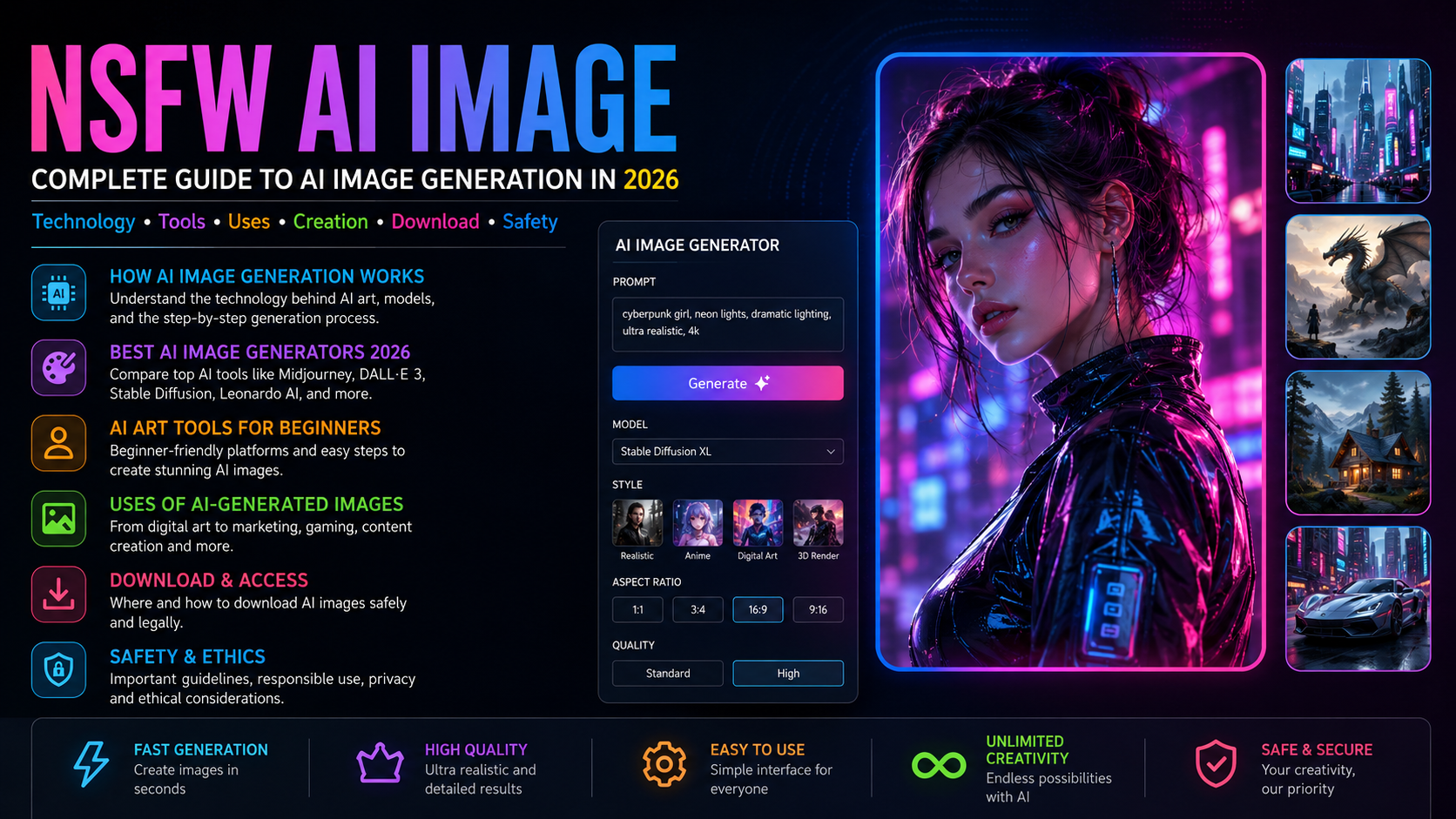
The keyword NSFW AI Image has gained significant attention in recent years as artificial intelligence continues to reshape digital content creation. AI image generation technology allows users to create unique visuals simply by describing what they want through text prompts. Whether someone is interested in digital art, marketing graphics, concept designs, or creative illustrations, AI-powered tools can generate high-quality images within seconds. The growing popularity of AI-generated visuals has encouraged millions of users to explore how these systems work, what tools are available, and how they can be used effectively. Understanding the technology behind AI image generation is important because it helps users create better content while also recognizing the benefits and limitations of these advanced systems.
What Is an NSFW AI Image?
An NSFW AI Image generally refers to an image generated through artificial intelligence technology based on user instructions or prompts. AI models are trained on large collections of visual data, enabling them to understand patterns, shapes, colors, lighting, and artistic styles. When a user enters a text description, the AI interprets that information and generates a completely new image that reflects the prompt. Unlike traditional graphic design methods that require artistic skills and specialized software knowledge, AI image generation allows almost anyone to create impressive visuals with minimal effort. This accessibility is one of the major reasons why AI-generated images have become increasingly popular among creators, businesses, and hobbyists.
Why AI Image Generation Has Become So Popular
The popularity of AI-generated images is driven by several factors, including speed, convenience, affordability, and creativity. Traditional image creation can take hours or even days depending on the complexity of the project, while AI tools can produce multiple image variations within minutes. Businesses use AI-generated visuals for marketing campaigns, social media content, presentations, and website graphics. Artists use AI as a creative assistant to explore new ideas and experiment with unique styles. Content creators appreciate the ability to generate custom images without relying entirely on stock photography. As AI technology improves, the quality of generated images continues to increase, attracting even more users from different industries.
How AI Image Generation Works
AI image generation relies on advanced machine learning models that have been trained using millions of images and text descriptions. During training, the AI learns how visual elements relate to specific words and phrases. When a user submits a prompt, the model analyzes the text and identifies important concepts such as objects, environments, colors, lighting conditions, and artistic styles. The AI then begins constructing an image by gradually transforming random visual noise into a coherent picture that matches the prompt. This process happens extremely quickly thanks to powerful algorithms and modern computing resources. The result is a unique image that reflects the user’s instructions while incorporating patterns learned during training.
The Role of Diffusion Models in AI Art
One of the most important technologies behind modern AI image generators is the diffusion model. Diffusion models start with random noise and gradually refine it into a meaningful image through multiple processing steps. At each stage, the AI removes unwanted noise while adding visual details that correspond to the user’s prompt. This technique allows AI systems to generate highly detailed artwork, realistic portraits, fantasy landscapes, and professional-quality graphics. Diffusion models have significantly improved image quality compared to earlier AI approaches, making them the foundation of many leading AI image generation platforms available today.
Benefits of Using AI Image Generators
AI image generators offer numerous advantages for both individuals and organizations. They save time by automating complex creative tasks and enable users to generate visual content without advanced artistic skills. Businesses can quickly produce promotional graphics, social media images, and advertising materials while reducing design costs. Artists can use AI as a source of inspiration or as a tool for rapid concept development. Educational institutions can create custom visual aids for learning materials, and entrepreneurs can generate branding assets for new projects. The ability to create unique images on demand makes AI image generation an attractive solution across many industries.
Best AI Image Generators in 2026
Several AI image generators have established themselves as industry leaders in 2026. OpenAI’s image generation technology is known for producing highly detailed and realistic images while offering powerful editing capabilities. Midjourney remains popular among artists because of its artistic style and exceptional visual quality. Stable Diffusion continues to attract developers and advanced users due to its open-source nature and extensive customization options. Adobe Firefly has become a favorite among professional designers thanks to its integration with Adobe’s creative ecosystem. Canva AI Image Generator offers a beginner-friendly experience, making it easy for users to create visuals for social media, marketing, and personal projects. Each platform has unique strengths, allowing users to choose tools that best match their needs.
AI Art Tools for Beginners
For beginners, entering the world of AI-generated art can seem overwhelming, but many tools are designed specifically for new users. Canva AI provides a simple interface where users can generate images with minimal technical knowledge. Adobe Firefly offers intuitive controls and professional-quality results, making it suitable for both beginners and experienced creators. Leonardo AI has gained popularity for character design and creative projects, while Microsoft Designer combines AI image generation with design templates to streamline content creation. These tools help users learn prompt writing, image customization, and creative experimentation without requiring extensive training or experience.
How to Write Better AI Image Prompts
The quality of an AI-generated image often depends on the quality of the prompt provided by the user. Effective prompts should be detailed, descriptive, and specific. Instead of writing a simple phrase such as “a city,” users can achieve better results by describing the scene in detail, such as “a futuristic neon-lit city at sunset with flying cars and cinematic lighting.” Including information about artistic style, camera angles, colors, mood, and lighting can significantly improve the final output. As users gain experience, they learn how small changes in wording can dramatically influence image quality and creativity.
Common Uses of AI-Generated Images
AI-generated images are now used in a wide range of applications. Businesses create marketing materials, advertisements, product mockups, and website graphics using AI tools. Social media creators generate custom visuals to increase audience engagement. Authors use AI-generated artwork for book covers and promotional materials. Game developers create concept art and character designs during early development stages. Educators use AI-generated illustrations to enhance learning experiences, while hobbyists explore creative projects purely for entertainment. The versatility of AI image generation continues to expand as technology evolves and new use cases emerge.
Challenges and Ethical Considerations
Despite its advantages, AI image generation also presents several challenges and ethical concerns. Questions about copyright, ownership, and originality remain important topics of discussion. Since AI models learn from large datasets, some creators worry about how their work is used during training. Additionally, AI-generated images can sometimes contain inaccuracies or unintended visual artifacts. Responsible use of AI technology requires transparency, respect for intellectual property, and compliance with platform guidelines. As regulations continue to develop, users should stay informed about the legal and ethical aspects of AI-generated content.
The Future of AI Image Generation
The future of AI image generation appears extremely promising as technology continues to advance. Future AI systems are expected to offer even greater realism, faster processing speeds, improved prompt understanding, and more sophisticated editing features. Integration with video generation, 3D design, virtual reality, and augmented reality will likely expand the possibilities of AI-powered creativity. Businesses, educators, artists, and content creators will continue to benefit from increasingly powerful tools that make visual content creation more accessible than ever before. As AI technology becomes more refined, it is likely to play a central role in the future of digital media and creative production.
Conclusion
The rise of the NSFW AI Image keyword reflects the growing interest in artificial intelligence and image generation technology. AI-powered tools have transformed the way people create visual content by making professional-quality image creation accessible to a wider audience. From understanding how AI image generation works to exploring the best AI image generators in 2026 and discovering beginner-friendly AI art tools, users now have more opportunities than ever to express their creativity. As technology continues to evolve, AI image generation will remain an important part of digital content creation, offering innovative solutions for artists, businesses, and creators worldwide.
If you are looking for NSFW AI Image tools, you can explore different AI platforms that generate adult-style images using text prompts. These tools are available online and are updated regularly with new features. You can access or try them by searching for related platforms or clicking the link below.
Generate your image: NSFW AI Image tools & generators
