

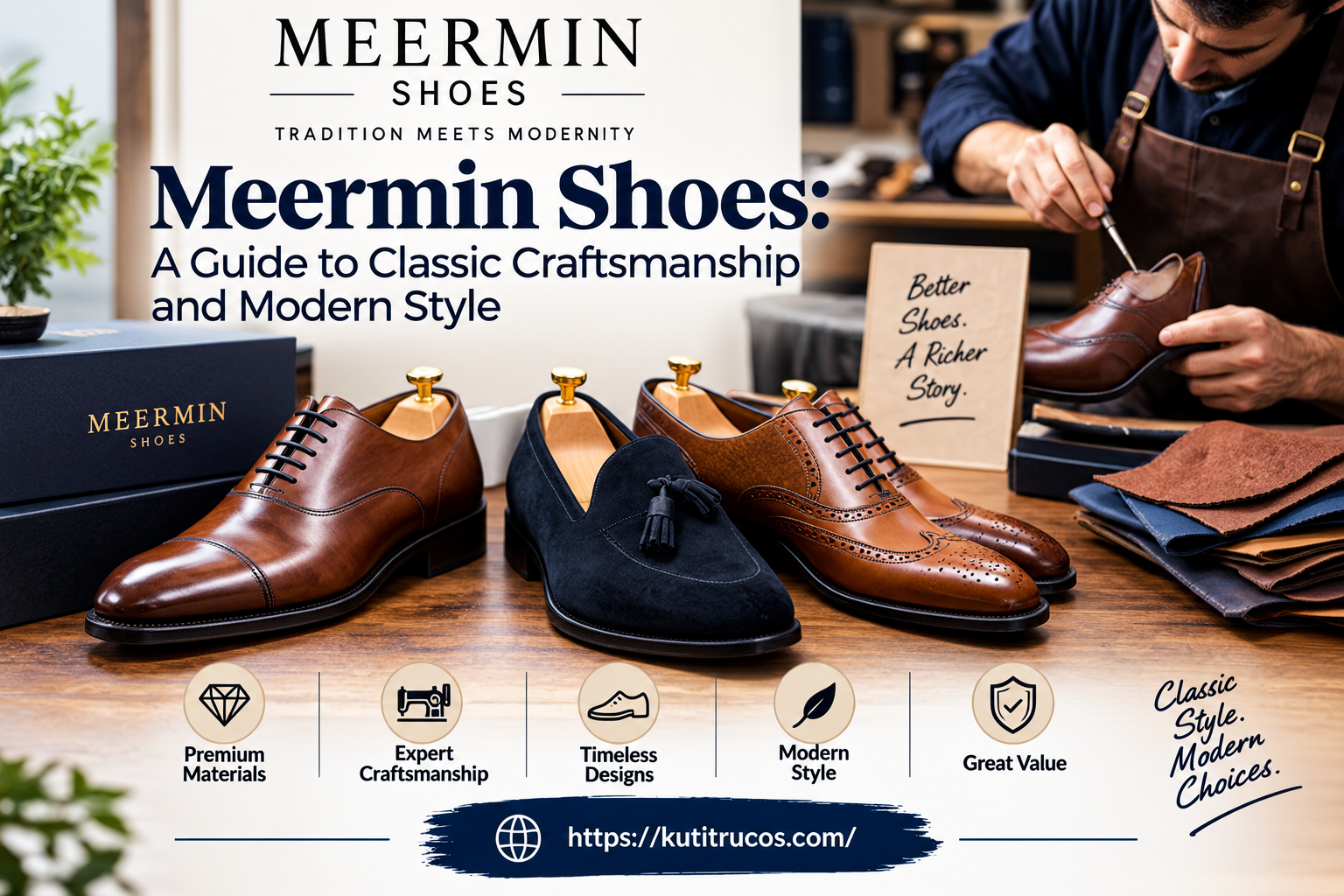
In a footwear market increasingly filled with fast-fashion sneakers and mass-produced dress shoes, Meermin Shoes offers a different approach. The brand focuses on traditional shoemaking techniques, carefully selected materials, classic silhouettes, and construction methods designed for long-term wear. At the same time, its designs can fit naturally into a modern American wardrobe, where versatility is often just as important as formal elegance.
Meermin is a family-owned footwear business with its design and management team based in Mallorca, Spain. Its shoes are currently produced in the company’s factory in Shanghai, China, using materials sourced internationally, particularly from France, Italy, Japan, and other major leather-producing regions. The company emphasizes direct distribution as part of its approach to offering traditionally constructed footwear at what it describes as a “radical value.”
That combination is what makes Meermin interesting. Its identity is rooted in European shoemaking traditions, but its shoes do not have to be reserved for traditional European wardrobes. Oxfords can work with American business clothing, loafers can become everyday staples, and boots can move easily between denim, chinos, wool trousers, and casual outerwear.
What Makes Meermin Shoes Different?
The first thing to understand about Meermin is that the brand is built around construction rather than simply appearance.
A shoe can look expensive without being constructed to last. Conversely, a well-built shoe may become more attractive as it develops character through regular use. Meermin places considerable emphasis on the second idea.
The company says it specializes in Goodyear welted, handwelted, and Norvegese footwear. These are traditional construction methods that differ from the cemented construction commonly found in mass-market footwear.
The result is a type of shoe that is designed around structure, durability, and repairability.
This matters because buying quality footwear is not only about how a pair looks on the day it arrives. The more important question is how that pair performs after months or years of wear.
The Importance of Goodyear Welt Construction
Goodyear welt construction is one of the most recognizable traditional methods used in quality footwear.
Instead of simply bonding the upper directly to the outsole, the construction incorporates a welt around the perimeter of the shoe. The upper, insole, welt, and outsole work together as part of a structured system.
One of the major benefits is that the outsole can generally be replaced by a skilled cobbler when it becomes worn. This can extend the useful life of a well-maintained pair considerably.
Meermin’s Classic Collection is centered around traditional Goodyear welted construction, with boots, loafers, Chelsea boots, and other classic silhouettes. The company specifically highlights durability and resoling as advantages of the construction.
For an American customer who is used to replacing inexpensive footwear every year or two, this approach represents a different philosophy: buy a well-constructed shoe, maintain it, and allow it to become part of the wardrobe for a much longer period.
Meermin’s Approach to Leather
Leather is another important part of the Meermin philosophy.
The company says it works with established tanneries in France, Japan, and Italy and develops certain leather articles directly with its tannery partners.
The current collections include different types of calf leather, suede, shell cordovan, and other specialty materials.
For example, the North American collection currently includes French calf, Italian calf, suede options, and Heritage Shell Cordovan models. Prices vary significantly depending on the leather and construction, with many Classic Collection styles currently listed around the low-to-mid $200 range while certain premium shell cordovan models are considerably higher.
This variety gives customers an opportunity to choose according to both style and budget.
A smooth black calfskin Oxford, for example, communicates a very different aesthetic from a suede loafer or rugged waxed leather boot. Yet all can belong to the same broader wardrobe.
Why the Last Matters
One of the most overlooked elements of buying quality shoes is the last.
A last is the mold around which a shoe is shaped. It influences the toe shape, heel shape, proportions, instep, and overall appearance of the finished shoe.
Meermin considers the last one of the foundations of its footwear and develops its lasts in-house. Its current range includes different shapes designed for different styles and fitting characteristics.
For example, the Hiro last is described by Meermin as a classic round shape used for Oxfords, boots, and monk styles. The Ron last is designed specifically for loafers, while the Rois has a more elongated almond-toe profile.
This is important because two shoes in the same size can feel very different if they are built on different lasts.
A customer should therefore avoid choosing a Meermin shoe based only on the numerical size. Understanding the last can make the fitting process much easier.
Classic Styles With a Modern Perspective
Meermin’s designs are strongly connected to traditional men’s footwear.
Oxfords, loafers, monk straps, Chelsea boots, wholecuts, and classic boots form important parts of the collection.
However, classic does not necessarily mean old-fashioned.
Modern styling often depends on proportions, colors, materials, and the rest of the outfit. A traditional Oxford in dark brown leather can look contemporary when paired with tailored trousers and a minimalist jacket. A penny loafer can look relaxed with chinos and a lightweight knit. A suede Chelsea boot can work with dark denim and a casual overshirt.
This is where Meermin fits naturally into modern American style.
Meermin Shoes and American Style
American fashion has always combined practicality with individual expression.
From Ivy-inspired tailoring to contemporary streetwear, American wardrobes frequently mix formal and casual pieces rather than keeping them completely separate.
That makes versatile footwear particularly useful.
A pair of Meermin shoes does not necessarily have to be worn with a complete suit. Depending on the design, the same philosophy of classic footwear can work with:
- Navy chinos
- Dark denim
- Wool trousers
- Pleated trousers
- Oxford shirts
- Knit polos
- Casual blazers
- Overshirts
- Harrington jackets
- Lightweight coats
- Smart-casual separates
The key is choosing the right silhouette.
Meermin Oxfords for American Workwear
The Oxford remains one of the most useful formal shoes.
A black cap-toe Oxford is appropriate for many traditional professional settings and formal occasions. Brown versions offer more flexibility for business-casual wardrobes.
Meermin’s formal collection currently includes several Oxford designs, including black calf and other leather variations. Its current formal range is positioned for professional, ceremonial, and formal dressing.
For an American office wardrobe, brown Oxfords can be especially versatile.
They can be worn with navy trousers, gray trousers, charcoal suits, medium-blue suits, and other tailored combinations. Black Oxfords remain more formal and are particularly useful when the dress code requires a conservative appearance.
Meermin Loafers for Everyday Style
Loafers offer a different advantage: simplicity.
Unlike lace-up shoes, loafers can be put on quickly and usually have a more relaxed visual character.
Meermin offers penny and tassel loafers, including suede options. The company describes its classic suede loafers as versatile choices that can be dressed up or down. These styles use the dedicated Ron loafer last and traditional Goodyear welted construction.
In an American wardrobe, loafers can move across several settings.
A suede penny loafer with chinos creates an easy weekend outfit. A dark leather loafer can work with tailored trousers for an office environment. A tassel loafer can add a slightly more distinctive character to an otherwise simple outfit.
The important point is that the loafer does not force the rest of the outfit to become extremely formal.
Chelsea Boots and Transitional Dressing
Chelsea boots have become one of the most adaptable boot styles in modern fashion.
Their clean silhouette allows them to work with both casual and more refined clothing.
Meermin currently features Chelsea boots among its collections, including different leather and specialty-material options.
For American styling, Chelsea boots can be paired with:
- Straight-leg denim
- Dark jeans
- Chinos
- Wool trousers
- Casual suits
- Field jackets
- Leather jackets
- Wool overcoats
The combination works because the boot provides structure without introducing the visual bulk of a traditional work boot.
Meermin and the Smart-Casual Wardrobe
Smart casual is one of the most useful categories for modern American dressing, but it can also be difficult to define.
The basic idea is to combine refined pieces with relaxed ones.
For example, consider dark jeans, a white Oxford shirt, and a brown leather shoe. The clothing is casual, but the footwear adds structure.
Or consider gray trousers, a navy knit polo, and suede loafers. The outfit is comfortable but still polished.
Meermin’s classic footwear works particularly well in this middle ground because many of its silhouettes maintain traditional proportions without requiring a complete formal outfit.
The Ultraflex System
Traditional welted shoes are often associated with structure, which can sometimes make new pairs feel less immediately flexible than lightweight casual shoes.
Meermin has developed the Ultraflex System as a modern interpretation of welted construction.
One current example is the 116660 black calf cap-toe Oxford. It uses Du Puy black boxcalf, the MON last, a flexible city rubber sole, vegetable-tanned leather for the structural insole, and a full-grain calf lining. The current North American listing shows a price of $220.
The Ultraflex design incorporates additional cushioning and a removable comfort insole while maintaining the structural principles associated with welted footwear.
This illustrates an important direction in modern footwear: traditional appearance does not necessarily have to mean traditional levels of stiffness.
Comfort and the Break-In Question
A common concern with traditionally constructed leather shoes is break-in.
Leather footwear can change slightly as it is worn. Meermin notes that leather in Goodyear-welted shoes may stretch somewhat and adapt to the wearer’s foot, but the amount of stretching is generally limited. The company also emphasizes that proper sizing is important from the beginning.
This is an important distinction.
A shoe should not be painfully tight with the expectation that it will eventually become dramatically larger. A proper fit should be the starting point.
Some traditional shoes may become more comfortable as the leather, insole, and footbed adapt to regular use. However, fit should always be evaluated before assuming that break-in will solve major sizing problems.
How to Choose the Right Meermin Shoe
Choosing a Meermin shoe becomes easier when the decision is divided into several steps.
1. Decide the Main Purpose
Start with the situation.
Do you need:
- A formal Oxford?
- A business shoe?
- A smart-casual loafer?
- A weekend boot?
- A Chelsea boot?
- A versatile everyday shoe?
The purpose should determine the silhouette.
2. Choose the Right Last
Next, investigate the last.
Meermin has multiple lasts with different shapes and fitting characteristics. Hiro, Ron, Rois, Mon, New Rey, Dani, Olfe, and Elton are examples in the current last guide.
This step is particularly important for online shoppers because the same nominal size does not guarantee the same experience across different lasts.
3. Select the Leather
Think about lifestyle.
Smooth calf leather is relatively easy to dress formally. Suede creates a softer and more relaxed appearance. More rugged leathers can work well with denim and casual outerwear.
Shell cordovan, meanwhile, occupies a different category and is often chosen by enthusiasts who appreciate its distinctive aging characteristics and premium positioning.
4. Consider the Sole
Leather soles provide a traditional appearance and can look particularly elegant with formal footwear.
Rubber soles can be useful when everyday practicality, traction, or wet-weather conditions are priorities.
The right choice depends on where and how the shoes will be worn.
Meermin Shoes for Different American Cities
The versatility of classic footwear becomes particularly obvious when considering different American environments.
In New York City, a pair of dark loafers or Chelsea boots can work well with trousers, denim, and layered outerwear.
In Boston, traditional leather shoes can complement wool trousers, chinos, coats, and heritage-inspired clothing.
In Chicago, a practical rubber-soled boot may be more useful during colder or wetter months.
In Los Angeles, suede loafers and lightweight leather shoes can fit naturally into a relaxed wardrobe.
In San Francisco, Chelsea boots and smart-casual footwear can transition between casual offices, restaurants, and weekend activities.
The point is not that one shoe is appropriate everywhere. Rather, Meermin’s range provides different constructions and silhouettes that can be selected according to climate, lifestyle, and wardrobe.
Why Quality Shoes Can Be a Long-Term Purchase
The economics of quality footwear are different from fast fashion.
A cheaper shoe may cost less initially but require replacement more frequently. A traditionally constructed shoe may require a larger initial investment but can potentially be maintained and resoled.
Meermin’s philosophy specifically emphasizes making products designed to last and reducing the need to repeatedly replace footwear.
This does not automatically make every expensive shoe a better purchase. The value depends on construction, materials, fit, care, frequency of use, and how long the owner actually keeps the shoes.
For someone who enjoys maintaining footwear, a welted shoe can become particularly rewarding.
Caring for Meermin Shoes
Good footwear still needs maintenance.
Leather shoes should not be treated as completely maintenance-free products.
A sensible care routine can include:
- Using shoe trees when appropriate.
- Allowing shoes to rest between wears.
- Removing surface dust regularly.
- Conditioning leather when necessary.
- Polishing smooth leather according to the desired finish.
- Protecting suede with suitable products.
- Avoiding prolonged exposure to excessive moisture.
- Taking worn soles to a qualified cobbler.
Shoe trees can help maintain shape and manage moisture after wear. Rotation is also useful because leather footwear benefits from periods of rest.
Maintenance does not need to become complicated. Consistency matters more than having a huge collection of products.
Meermin Shoes vs. Fast-Fashion Footwear
The biggest difference is philosophy.
Fast-fashion footwear often prioritizes quick production, trend cycles, and low initial prices.
Meermin’s approach places more emphasis on traditional construction, materials, lasts, and long-term use.
Neither approach serves exactly the same customer.
Someone looking for a $40 seasonal shoe may have completely different priorities from someone who wants a welted leather Oxford that can potentially be maintained for years.
The important comparison is therefore not simply price. It is the relationship between price, construction, expected lifespan, maintenance, comfort, and personal use.
What Makes Meermin Relevant Today?
Traditional footwear might seem out of place in a sneaker-dominated world, but the opposite can actually be true.
Modern wardrobes increasingly mix categories.
People wear sneakers with tailored trousers, denim with loafers, casual jackets with dress shirts, and relaxed clothing with structured footwear.
This environment creates space for brands that preserve traditional construction while presenting it in accessible silhouettes.
Meermin’s current range demonstrates this combination through classic Oxfords, loafers, Chelsea boots, suede styles, shell cordovan, and newer comfort-oriented constructions such as Ultraflex.
The result is footwear that can participate in traditional dressing without being limited to it.
Is Meermin Right for You?
Meermin may appeal particularly to people who care about:
- Traditional shoe construction
- Leather quality
- Long-term wear
- Classic silhouettes
- Resolving potential
- Smart-casual versatility
- European-inspired footwear design
- Value within the welted-shoe market
- Building a smaller but more durable footwear collection
It may be less suitable for someone whose primary priority is an ultra-light sneaker-like feel, immediate softness, or the lowest possible purchase price.
The best way to evaluate the brand is therefore to consider your own wardrobe and expectations rather than treating traditional construction as automatically superior for every person.
Building a Small Meermin Collection
You do not need ten pairs of dress shoes to build a versatile wardrobe.
A thoughtful collection could begin with three different categories.
First: A Dark Oxford
A black or dark brown Oxford provides a formal foundation.
Second: A Brown Loafer
A penny or tassel loafer can handle smart-casual occasions and warmer weather.
Third: A Chelsea or Casual Boot
A Chelsea boot or another versatile leather boot can cover colder seasons and casual outfits.
With these three categories, many different outfits become possible.
The goal is not to collect shoes simply because they are well made. The goal is to own footwear that fills different roles. For brands, fashion businesses, and footwear websites looking to build their online presence, high-quality content placement can also play an important role in reaching relevant audiences. A well-planned guest posting strategy can help businesses showcase their expertise, strengthen brand visibility, and connect with readers through established websites. Those interested in exploring professional guest posting opportunities can learn more through DigiMarkr’s Guest Posting Service, which provides options for businesses looking to expand their digital reach through relevant content placements.
Final Thoughts
Meermin Shoes represent an interesting meeting point between traditional shoemaking and contemporary wardrobe needs.
Its roots are connected to Mallorca, Spain, while its current production takes place in Shanghai using internationally sourced materials. The company focuses on Goodyear welted, handwelted, and Norvegese footwear, while its collections include Oxfords, loafers, boots, Chelsea boots, suede styles, and premium leathers.
For American consumers, the appeal is not simply that these shoes look traditional. Their real versatility comes from the ability to combine classic construction with modern clothing.
A Meermin Oxford can become part of a professional wardrobe. A loafer can work with chinos and denim. A Chelsea boot can transition from casual weekends to more polished evenings. Meanwhile, different lasts and construction options allow shoppers to consider fit and comfort alongside appearance.
Ultimately, classic craftsmanship remains relevant because good design does not have to follow short-lived trends. When combined with practical styling, careful maintenance, and the right fit, traditionally constructed footwear can become one of the most useful parts of a modern wardrobe.
Meermin’s approach demonstrates that classic shoes do not have to belong exclusively to the past. With the right styling, they can become part of a distinctly modern American way of dressing-where craftsmanship, versatility, and personal style work together.
